
Hobart Casino Guide to Poker, Stays and Facilities
 Available in AU
Separate poker facilities from tournament listings, and assess accommodation, dining, parking and entertainment claims without assuming details.
Table of Contents
- Poker Rooms and Tournaments: What Can Be Confirmed
- Accommodation Near Hobart Casino
- Hobart Casino Hotel Rooms and Stays
- Parking, Dining and the Limits of Online Casino Access
- Baccarat, Bars, Car Parking and Concerts
- Breakfast, Buffet Searches, Resort Claims and Rewards
- Opening Hours, Development and Entertainment
- Address, Dress Code, Spa and Careers
- Restaurants at a Hobart Casino
- Casino Food and Pool Searches
Poker Rooms and Tournaments: What Can Be Confirmed
A poker room and a poker tournament are separate offerings. A room describes a space set aside for poker; a tournament describes an organised competition with defined participation terms and a schedule. One does not establish the other. A venue could have poker tables without a published tournament calendar, or advertise an event without maintaining a dedicated poker room. Treating the terms as interchangeable produces a more confident answer than the details justify.
For a Hobart venue, the practical question is not simply whether the word “poker” appears in a listing. The useful distinction is between a named, operating poker facility and a general casino description that does not specify which games are available. A room claim becomes meaningful when the venue identifies the facility and describes its operation. Without those particulars, “poker room” may be a label repeated across directories rather than a clear account of what is on site.
Tournament information needs its own checks. A usable event notice would identify the organiser, event date, format, entry conditions and any registration process. These details determine whether an event is scheduled, open to participants and relevant to a particular date. A general reference to poker, or an old event announcement, cannot establish that a tournament is currently being run. Event details change; a past schedule is not a standing promise.
Choosing a casino for Hobart in 2026 means weighing practical details alongside the information available about each operator. This list offers a concise reference to help you decide what merits a closer look.
Payout speed: crypto ~90 minutes, fiat 1-5 days · Min. deposit: A$30 Kingmaker lists crypto payouts at around 90 minutes and fiat payouts at 1–5 days. The minimum deposit is A$30.
License: Curacao eGaming OGL/2024/923/0383 (Antillephone N.V.) · Min. deposit: A$30 WinSpirit Casino lists a Curacao eGaming licence, OGL/2024/923/0383, issued through Antillephone N.V. Its minimum deposit is A$30.
License: Curacao Golden Pokies is listed with a Curacao licence.
License: Curacao eGaming (Dama N.V.) JeetCity Casino is listed with a Curacao eGaming licence through Dama N.V.
License: Curacao Gaming Control Board OGL/2023/174/0082 (Dama N.V.) SpinsUp lists a Curacao Gaming Control Board licence, OGL/2023/174/0082, through Dama N.V.
License: Curacao · Payout speed: crypto 30-60 minutes, fiat 1-5 days · Min. deposit: A$10 Wild Tokyo lists a Curacao licence, with crypto payouts at 30–60 minutes and fiat payouts at 1–5 days. Its minimum deposit is A$10.
License: Curacao eGaming (Hollycorn N.V., since 2017) · Min. deposit: A$20-30 (depends on the offer) Playfina Casino lists a Curacao eGaming licence through Hollycorn N.V., held since 2017. The minimum deposit is A$20–30, depending on the offer.
License: Curacao Gaming Control Board OGL/2023/176/0095 (Hollycorn N.V.) Neospin lists a Curacao Gaming Control Board licence, OGL/2023/176/0095, through Hollycorn N.V.
License: Curacao OGL/2024/1335/0780 · Min. deposit: EUR 20 Vegaz Casino lists a Curacao licence, OGL/2024/1335/0780. Its minimum deposit is EUR 20.
Payout speed: crypto under 1 hour, PayID 1-3 business days · Min. deposit: A$20 (A$30 to qualify for the bonus) Ricky Casino lists crypto payouts in under an hour and PayID payouts in 1–3 business days. The minimum deposit is A$20, or A$30 to qualify for the bonus.
The word “rooms” also creates ambiguity. In searches about a casino, it can mean poker rooms, hotel rooms or other private spaces. Those are different facilities, and evidence about one does not confirm another. A venue profile that mentions accommodation, for instance, says nothing by itself about poker tables or tournament play. Likewise, a poker listing cannot establish that overnight stays are available. The distinction matters because broad venue pages often place unrelated services beside each other.
A sports bar is another separate category. Its presence would not demonstrate that poker is offered, and poker information would not establish that a sports bar operates at the same venue. These labels can appear together in broad descriptions of a casino, but each requires specific supporting details. For a practical assessment, the relevant record should name the facility or event rather than rely on a general description of the venue.
Opening status is separate again. A page describing poker does not, on its own, establish that the venue or a particular facility is open today. Nor does a general opening-hours listing confirm that poker is being dealt or that an event is taking place during those hours. The relevant details are facility-specific and date-sensitive. A current status notice and a poker schedule answer different questions.
The cleanest way to assess a claimed poker offering is to match each statement to the evidence it needs. A room requires a clear identification of the poker space and its operating conditions. A tournament requires a dated event notice with participation details. A general casino description, a sports-bar mention, accommodation information or a past tournament reference cannot substitute for either. This is not a technical distinction: it changes what can reasonably be expected on arrival.
Accordingly, “poker at a Hobart casino” should not be treated as a single confirmed product. It may refer to casual table play, a dedicated poker room, a scheduled tournament or merely a broad category in a venue listing. Each has different conditions and requires different information. Until the specific facility or event is identified, claims about tables, formats, entry arrangements, schedules or availability remain claims rather than operational details.
A concise venue description can still be useful, but only within its limits. If it confirms the casino’s general identity, that does not settle the poker question. If it names poker, that does not establish a tournament calendar. If it lists a past tournament, that does not confirm a future one. The distinction between a facility, an event and a general venue reference keeps the assessment accurate without turning unrelated room, bar or opening information into evidence of poker.
Accommodation Near Hobart Casino
Accommodation searches linked to a Hobart casino are best treated as a location-and-cost comparison, not evidence that a particular property is affiliated with a venue. A hotel, apartment or guesthouse may be described as close by without being operated by a casino or included in a casino package. The distinction matters: proximity is a travel question; an accommodation deal is a commercial offer with terms that need to be checked.
- Establish the venue’s exact location from a reliable source
- Map the route using the actual intended travel mode
- Compare the total cost including all mandatory charges and taxes
- Check cancellation terms and refundable rate flexibility
- Rely on a headline nightly rate without checking total fees
- Assume distance on a map equals actual journey time
- Treat a proximity description as evidence of affiliation
- Assume a promotional benefit is applicable to all dates
Before comparing properties, establish the venue’s exact location from a reliable, current source. Without a confirmed address, “near” has no useful fixed meaning. A property’s own description may refer to a short journey by car, public transport or foot, and those are not interchangeable. Map the route using the travel mode that would actually be used, then check whether the route is practical at the intended arrival and departure times. A distance shown on a map does not establish journey time, transport availability or ease of access.
The total cost is more informative than a headline nightly rate. Compare the amount payable for the same stay dates, including mandatory charges, taxes, deposits and any fees that apply at booking or arrival. Check the cancellation terms and the date by which a booking can be changed without a charge. A lower advertised price can be a poor deal if it requires advance payment and leaves little flexibility; a refundable rate has value only if that flexibility is needed and its price difference is acceptable.
Casino accommodation deals should be assessed as packages, not as labels. A promotion may combine a stay with another benefit, but the benefit has financial value only if it can be used and would otherwise have been purchased. Read the eligibility conditions, booking window, stay dates, exclusions, cancellation rules and any requirement to book through a particular channel. A promotion that cannot be applied to the intended dates is not a saving. Neither a casino reference in an accommodation listing nor a promotional headline establishes that the venue itself is offering the deal.
Keep accommodation comparisons separate from gaming claims. References to gaming machines, poker machines or casino promotions do not confirm that a property is connected to a casino, and they do not establish what is available at a venue. The lodging decision can be calculated from the stay’s total cost, location, transport needs and booking conditions; unrelated claims should not affect that calculation.
A useful comparison records the same items for each candidate: the full payable price, what is included, the payment and cancellation conditions, the location and route, and whether the booking is directly with the property or through an intermediary. If a benefit is described as complimentary, check whether it is actually included in the booking confirmation and whether restrictions apply. If the offer’s terms are unclear, its value should not be counted in advance.
The result is a more reliable shortlist than one based on “casino accommodation” wording alone. It avoids treating an unconfirmed association as a fact and keeps the calculation anchored to the stay itself. Availability, proximity and promotional terms must be established for the specific property and dates before any booking decision is made.
Hobart Casino Hotel Rooms and Stays
A casino hotel is more specific than a hotel located near a casino. The term implies that accommodation and casino facilities belong to the same venue or are operated as a connected property. That distinction matters when a room listing uses casino imagery or wording: a nearby gaming venue does not, by itself, make the hotel a casino hotel.
For a Hobart casino hotel, the central question is whether rooms are actually offered as part of the venue. A useful listing should identify the property, explain how accommodation relates to the casino, and provide room details through a booking channel. Without those basics, the label alone cannot establish that a room is available, that the casino is on site, or that a stay includes access to particular facilities.
Room inventory and casino access are separate matters. A hotel booking confirms accommodation only on the terms shown for that booking. It does not automatically establish that gaming facilities are open, that entry is included, or that any other venue service is available during the stay. Those conditions need to be stated independently. Treating a room description as proof of casino access is a neat shortcut, but a poor basis for a booking decision.
The same distinction applies to the phrase “casino hotels in Hobart”. Plural wording does not establish that several properties exist or that they share an operator. Each property needs to be assessed on its own details: who provides the room, where the room is located, and what the booking terms actually include. A search result or directory category may group properties for convenience; it is not a substitute for a confirmed reservation description.
Room rates also need to be read as a complete transaction rather than a headline figure. The relevant comparison is the total shown at checkout, including any stated taxes, fees, deposits or cancellation conditions. If a booking page does not make an element clear, the cost cannot be calculated reliably from the room label alone. No sensible comparison can be made between stays unless the same basis is used for each price.
Dates and availability are equally important. A property may describe room types without showing that a room can be booked for the required dates. A displayed rate is meaningful only when it applies to the selected stay and the booking conditions are visible. Changes to dates, occupancy or cancellation terms may change the final amount; those are contractual details, not cosmetic footnotes.
There is also a practical difference between a hotel room and a casino hotel room. The first is accommodation; the second adds an affiliation claim that should be supported by the property’s own description. A room close to a casino can still be independent accommodation, while a casino-branded listing may refer to a venue that does not provide rooms directly. Location, ownership and booking responsibility should not be inferred from a shared name or promotional photograph.
The useful standard is therefore documentary: a named property, a room that can be selected for the intended dates, a clear total price, and terms identifying the booking provider. Casino connection should be described explicitly rather than assumed. Until those details are visible, “casino hotel” remains a category label, not a confirmed room arrangement.
Parking, Dining and the Limits of Online Casino Access
Parking, dining and bingo are separate venue questions, and none can be settled by the phrase “casino in Hobart” alone. A search result or directory entry is not confirmation of a particular service. Before making plans, the relevant details would need to be confirmed directly with the venue: whether parking is available, whether any charge applies, whether valet service is offered, and whether bingo or dining is operating. No price, booking condition or service arrangement should be assumed from the venue label.
Legal Restriction
Under the Interactive Gambling Act, Australian-based operators are prohibited from providing online casino games, such as pokies, blackjack, and roulette, to people within Australia.
The same distinction matters for dining. A reference to a casino does not establish that it has a dining room or that a meal service is available at a particular time. Details can change, so a dated listing is not a substitute for current confirmation. The practical value of a claimed free-parking offer also depends on its conditions; without the terms, “free” is not a usable cost figure.
Online access is a different matter from what may be available at a physical venue. Under the Interactive Gambling Act, an operator based in Australia cannot provide online casino games to people in Australia. That restriction covers casino products such as pokies, blackjack and roulette. A website using an Australian theme or referring to Hobart does not alter the operator’s legal position.
Offshore platforms sit outside Australian regulation. Their status is often described as a legal grey area for players, but that does not make them Australian-regulated services or provide the protections of local oversight. The distinction is straightforward: the law prohibits Australian-based operators from supplying these online casino games domestically, while offshore operators are not regulated under Australian law. A Hobart label, local currency display or localised promotion cannot establish otherwise.
Access can also be affected by location controls. Online casinos and game providers may use an IP address to identify a player’s location and block access from excluded countries. A game that is absent from a lobby or fails to load may therefore be restricted by region; it is not evidence that the game is temporarily available through another route. A specialist review has reported that some providers block Australian players in anticipation of possible future changes to gambling law, but that is a time-sensitive report, not a rule applying to every provider.
Using a VPN to reach region-blocked pokies sites can breach the operator’s terms of service and may lead to account suspension. It does not turn an offshore platform into a locally regulated casino, and it should not be treated as a reliable way to secure access or a payout.

For any online gambling decision, the cost calculation should stop before losses become a reason to increase stakes. Chasing losses does not improve the odds; a session budget should be set from available funds and kept separate from essential expenses. If a platform’s legal status, terms or access conditions are unclear, those uncertainties are costs in their own right—not evidence of a better offer.
Baccarat, Bars, Car Parking and Concerts
Baccarat, craps, a bar, parking and live concerts are separate venue features, not details that can be inferred from a casino name or a general listing. For Hobart, each needs its own confirmation. A page that mentions gaming or entertainment in broad terms does not establish that a particular table game, bar, car park or concert programme is available.
Baccarat is a table game; craps is a different dice game. Neither should be treated as confirmed at a Hobart venue without current, venue-specific information. Even where a listing names a game, the practical detail matters: whether it is offered on the date in question, whether the listing refers to a physical table or another format, and whether any conditions apply. A search result alone is not a reliable basis for assuming availability.
The same distinction applies to a bar. A venue’s general hospitality description does not establish that it has a bar, where it is, when it operates or whether access is limited to particular areas or events. Those details affect the usefulness of the information more than a generic label does. If no current official listing identifies the bar and its arrangements, those points remain unsettled rather than implied.
Parking needs similarly specific confirmation. A map pin or a nearby car park does not prove that parking belongs to the casino, that it is open to visitors, or that spaces are available during an event. Before travelling, check the venue’s own current directions and any parking information it publishes. If the information does not state the operator, access arrangements or applicable conditions, it should not be read as a promise of on-site parking. Nearby public parking and venue car parking are not interchangeable.
Concert searches call for a dated event listing, not a general statement that a venue offers entertainment. A scheduled performance should identify the event and its date; without that, there is no basis for treating a concert as upcoming or recurring. Event details can change, so an old listing is not confirmation of current programming.

Contact details and a map should be checked against an official venue source before use. A contact number copied into an unrelated directory may be outdated, and a map result can point to a broad area rather than a specific entrance or facility. If no official contact or location information can be verified, it is safer not to substitute a guessed number, address or pin.
For the phrase “best casino in Hobart 2026”, the practical standard is therefore straightforward: a feature counts only when its availability and conditions are stated clearly and currently. Baccarat or craps, a bar, parking and concerts each require separate evidence. A single broad venue description cannot settle all four, and a confident-sounding listing is not a substitute for operational detail.
Breakfast, Buffet Searches, Resort Claims and Rewards
Breakfast and buffet descriptions answer different questions. “Breakfast” may refer to a meal available for purchase, while “breakfast included” would make it part of a stay’s terms. A buffet is a service format, not a guarantee of particular dishes, service times or inclusion in a room rate. Those distinctions matter when comparing the total cost of a visit: a headline price cannot be treated as covering a meal unless the terms say so.
For any Hobart listing, the useful details would be the service offered, its availability, what the quoted price includes and any conditions attached. A breakfast description without those terms cannot be costed reliably. The same applies to buffet claims: the label alone does not establish whether it is operating on a particular date or whether access is included with another purchase. These are practical distinctions, not fine print for its own sake; an omitted meal cost changes the final calculation.
“Resort” is similarly broad. It describes a positioning, not a defined package of facilities. A resort label does not by itself establish that a property has a casino, accommodation, food service or leisure facilities, nor that any such feature is available to every visitor. Each claimed component needs its own terms. Combining a resort label with casino or breakfast language should not be read as proof that the services form one package.
A “resort” label is a positioning and does not automatically guarantee the presence of a casino, accommodation, food service, or leisure facilities.
Rewards require a separate calculation. A loyalty programme has value only where the earning rules, eligible purchases, redemption options and any expiry or access conditions are clear. A points balance is not the same as a cash discount: its practical value depends on what it can be exchanged for and under what conditions. If benefits are tied to a particular stay or meal, the eligibility terms determine whether they reduce the cost or simply add a promotional label.
A sensible comparison therefore separates the bill into confirmed components: the stay, any meal, any facility access and any reward redemption. A benefit that cannot be used for the intended visit should not reduce the estimated cost. Nor should an advertised reward be counted at face value without knowing what purchase qualifies and what the points can actually buy.
Employment searches belong to a different decision. A hospitality job listing needs its own employer, role, location and employment terms; a venue’s resort or rewards language says nothing about vacancies. Keeping those subjects distinct avoids treating a brand description as evidence of a job opportunity.

The useful standard is straightforward: treat each service and benefit as a separate line item, and count it only when its conditions are stated. A breakfast, buffet, resort feature or reward may be relevant to a Hobart visit, but the wording alone does not settle the price or availability.
Opening Hours, Development and Entertainment
Whether a casino in Hobart is open is a status question, not something that can be settled by an old directory entry or a search-result snippet. Listings can remain visible after details change. A stated opening time also needs a date and a clear connection to the venue; without those, it cannot establish that the doors are currently open or that regular hours apply.
The same distinction matters for claims about reopening. A proposal, planning discussion or announcement of intended work is not evidence that a site has reopened. Development has stages: a concept is not an approval, approval is not completed construction, and construction is not proof of public access. Any report should be read for its date, the named project stage and whether it describes a confirmed outcome or a possibility.

Entertainment and event information is similarly time-sensitive. A past event listing confirms only that an event was advertised for a particular date, not that it is scheduled again. A current programme needs a date, venue details and a clear indication that bookings or attendance arrangements are active. Broad descriptions such as “live entertainment” do not provide enough information to establish what is happening or when.
A review may be useful for understanding what a visitor experienced at the time it was written, but it is not a reliable source for current hours, development progress or future events. The publication date matters, as does the difference between a reviewer’s observation and an official update. An account describing a venue as open on one occasion does not confirm its present operating status.
Employment claims require the same separation between plans and outcomes. A development announcement may refer to possible jobs, but that does not establish that vacancies exist. A hiring claim should be tied to a current recruitment notice and a named employer; otherwise, it remains a projection rather than an employment opportunity. This is particularly relevant when reporting repeats an announcement without checking whether recruitment has begun.
Menu references are a separate kind of detail from operating status and event schedules. A menu attached to an old listing cannot establish current service arrangements. It should not be treated as evidence that a venue is open or that the listed offering remains available.
For a practical assessment, each claim needs a source, a date and a specific status: proposed, approved, under way, open, or scheduled. If one of those elements is missing, the claim should not be upgraded into a current fact. That standard avoids turning an old listing or an intention into a present-tense promise.
Address, Dress Code, Spa and Careers
A venue address, entry policy, spa service and job vacancy are separate operational details. A casino’s name or a general description of Hobart does not establish any of them. Each needs to be tied to a specific operating venue and a current, official notice; otherwise, a street location, clothing rule, treatment menu or open role should not be treated as settled.

For a physical address, the useful distinction is between a venue’s registered or postal details and the entrance intended for visitors. A map result can point to a nearby building or an outdated listing, so a practical location should match the venue’s own contact information. The same standard applies to a dress code: a formal-sounding description is not a rule. Any requirement concerning footwear, clothing or entry conditions needs to come from the venue’s current policy rather than an assumption about casinos generally.
Spa searches involve another separate service. A day spa may be inside a hotel, attached to a resort or operated independently; the wording alone does not establish which arrangement applies in Hobart. Service availability, booking conditions and opening times are matters for the named business to state. Treating a spa as a casino facility without that link would combine two claims that need separate support.
Careers information also has a narrow meaning. A general interest in casino work is not evidence of a vacancy, employer or hiring process. A legitimate listing should identify the employer, role, location and application route. Those details matter more than a broad label such as “casino careers”, particularly when the business name behind the advertisement is unclear.
The word “games” needs similar care. In-person games at a venue and online casino games are not interchangeable services. Under the Interactive Gambling Act 2001, operators based in Australia cannot provide real-money online casino games, including pokies and table games, to people physically in Australia. A search for games associated with Hobart does not change that legal boundary or establish an online service as lawful.
The practical rule is simple: venue-specific claims belong to the named venue, while online casino access is governed by Australian law. Address, dress, spa and employment details should not be inferred from one another; each stands or falls on its own current information.
Restaurants at a Hobart Casino
A restaurant described as being “at” a casino could mean a dining room inside the venue, a separately operated business in the same complex, or an independent restaurant nearby. Those are different arrangements. The distinction matters for location, entry requirements, bookings and whether a meal can be treated as part of a casino visit.
For Hobart, a restaurant name alone is not enough to establish that it is inside a casino. A useful listing should identify the venue and its precise location, rather than relying on a broad label such as “casino dining”. The operator’s own venue information is the clearest place to check whether a restaurant is part of the property or simply in the surrounding area.
Menus and booking details also need to be tied to a specific restaurant. A menu published by an independent nearby business says nothing about the casino’s own dining arrangements. Likewise, a third-party directory entry may describe a former tenant or an outdated arrangement. A current menu, booking page or venue statement is more informative than a name repeated across listings.
The phrase “casino restaurant” can also blur the difference between a restaurant and other hospitality spaces. A rooftop bar, for instance, is not necessarily a restaurant, and a restaurant’s presence would not establish that a rooftop venue exists. For anyone comparing options, the relevant details are the venue’s actual format, location, service times and booking conditions—not the casino association in a headline.
Searches for restaurants near a casino are broader still. Proximity does not make an independent restaurant part of the casino, and a nearby address does not confirm shared access, trading hours or any arrangement between businesses. Maps can help establish distance, but the restaurant’s own current information is needed for its operating details.
The same checks apply to claims about a casino in Hobart, Australia: the name should match an identifiable operating venue, and restaurant information should be attributable to that venue rather than inferred from general casino listings. Without that link, claims about menus, reservations or dining options are not a sound basis for planning.
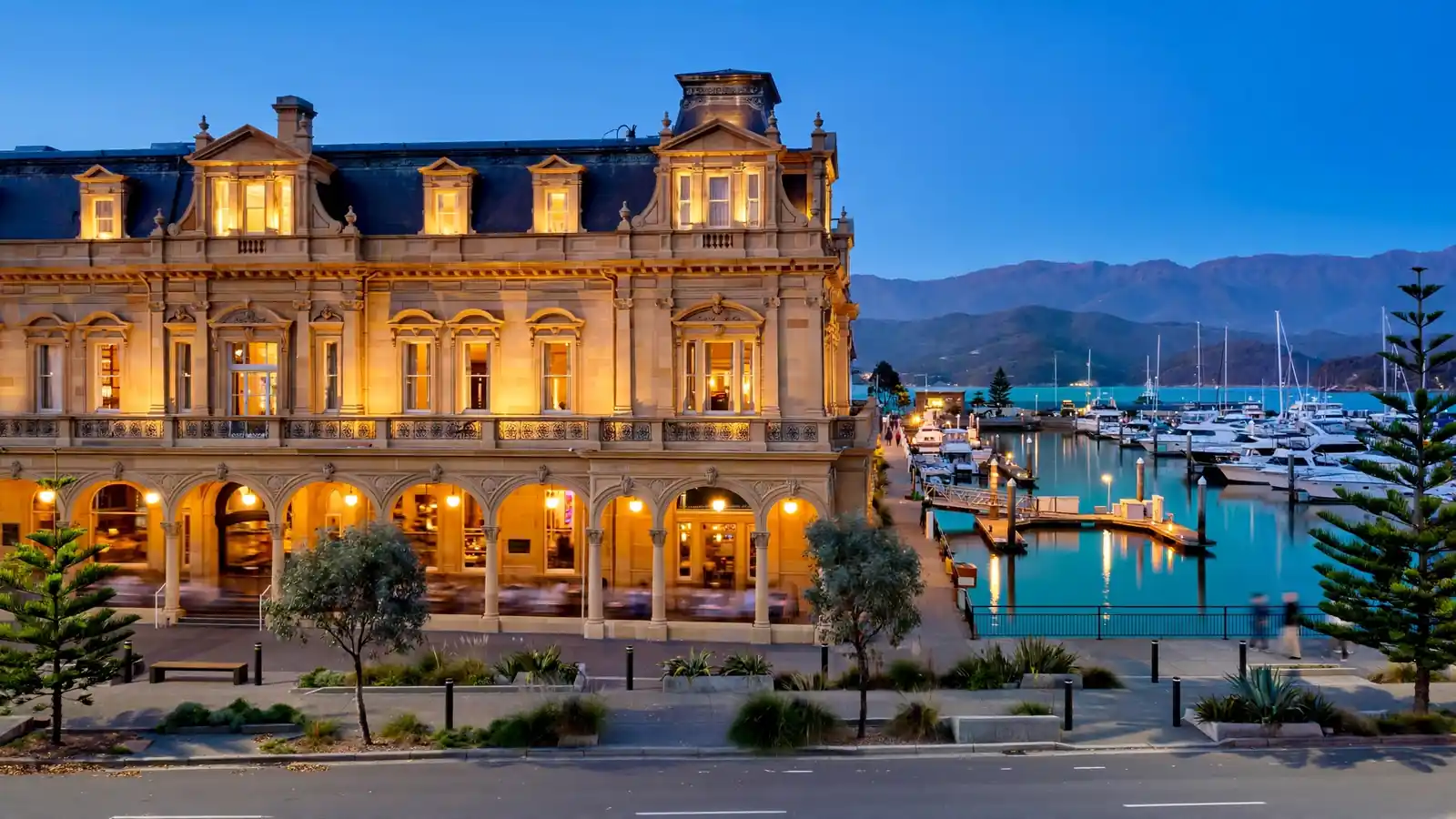
This is a narrow but useful distinction. “At the casino” describes a relationship to the venue; “near the casino” describes geography. Neither phrase, on its own, establishes what food is served or how a restaurant visit works. A reliable listing needs to make the relationship explicit and provide current details for the restaurant itself.
Casino Food and Pool Searches
Food and pool information should be treated as separate facility questions, not inferred from a casino’s name or from the presence of other visitor services. A reference to food does not establish that a venue has a food court, and a casino setting does not establish access to a swimming pool.
For anyone considering food at a Hobart casino, the useful distinction is between a general food service and a dedicated food-court area. Those are not interchangeable: a food court implies a particular layout and choice of vendors, while a general food listing says little about the format. Without current venue information confirming the arrangement, neither should be presented as an available feature.
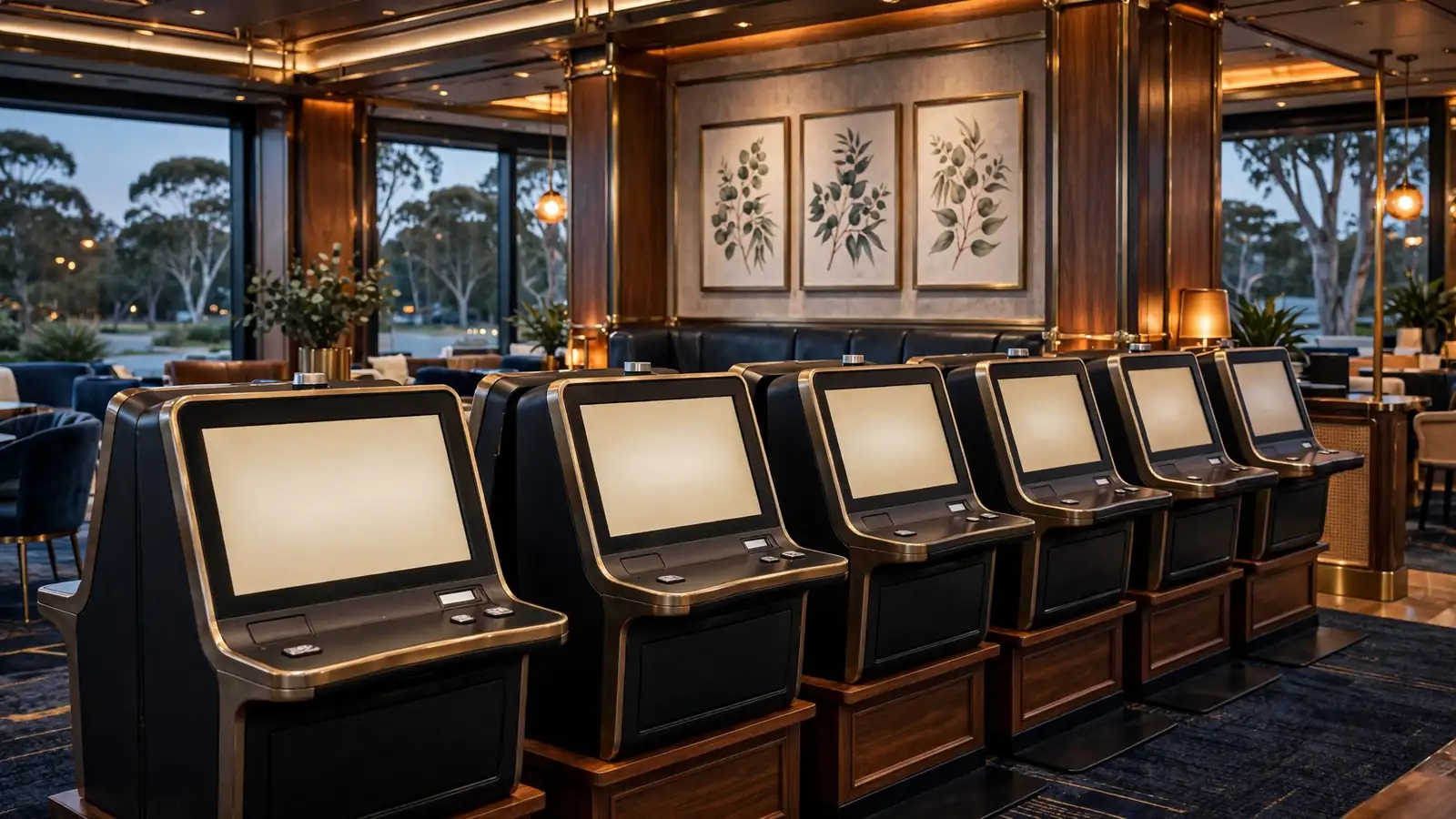
The same standard applies to a pool. A pool may be part of a hotel or resort elsewhere, but that does not make it a casino facility in Hobart. A photo, directory entry or broad description of a property is not enough to establish whether a pool exists, where it is located, or whether casino visitors can use it. Those details require confirmation from the venue itself.
Before making plans around a meal or a swim, check an official, current venue listing and look for the specific facility named. If the information does not distinguish a food court from other food service, or a casino pool from a pool elsewhere on a property, the practical detail remains unresolved. That matters because a food stop or pool visit can shape transport and timing, even when neither involves a booking or a separate charge.
General descriptions are not a substitute for facility details. For Hobart, claims about casino food courts and pools should therefore remain unconfirmed unless the venue publishes clear, current information. No particular food-court layout or pool access can be assumed from the search term alone.
Written by the editors at Oz2win Casino.